
Photta
Transform Your Product Photography with AI
Join thousands of brands creating professional product photos instantly. Start free, no credit card required.
Get Started Free
Selin Aydın
Visual Commerce Lead at Photta
A shopper cannot smell your perfume through a screen. So the picture and the bottle have to do the whole job of convincing them. That is the strange thing about selling fragrance online: the one sense that matters is the one you cannot show, which puts an enormous amount of weight on how the bottle looks.
The good news is that buyers already shop with their eyes here. In an Ipsos survey for the Paper and Packaging Board, 72 percent of Americans said a product's packaging design influences their purchase decisions, and 81 percent said it sways their choice when buying a gift. Fragrance is often a gift. Your bottle photo is doing more selling than your copy ever will.
Selling a scent you cannot smell
Fragrance is one of the healthier corners of beauty right now. Mordor Intelligence estimates the fragrance and perfume market at about US$78 billion in 2025, rising toward US$84 billion in 2026, and a growing share of that is bought online by people who will never sample it first.
When you remove smell from the decision, the brain reaches for the next cue: how it looks. A 2025 systematic review in Nature's Humanities and Social Sciences Communications found that the visual elements of packaging design shape purchase intention in measurable ways. For perfume that means the glass, the cap, the color of the juice, and the mood around it are not decoration. They are the argument.
The bottle is the hard part
Perfume bottles are glass full of colored liquid with a shiny cap. Almost every surface either reflects your studio or refracts the light passing through it. That is what makes them tricky, and also what makes a good shot look expensive.
What actually works:
- Light the glass from behind or the side. A backlight or a bright card behind the bottle lets the liquid glow and separates it from the background. Front light alone makes glass look flat and dull.
- Shape your reflections on purpose. Tall white cards on each side give the bottle clean vertical highlights that read as quality. Black cards carve dark edges so the shape stays crisp.
- Mind the cap. A metal or mirrored cap will catch the whole room. Flag it, angle it, or block the reflection with a card until it reads clean.
- Show the true color of the juice. Amber, rose, and pale gold all shift fast under the wrong white balance, and color is a real reason people feel let down on arrival. Check it against the bottle in your hand.
- Keep the label sharp and straight. People read it. Wipe fingerprints, square the bottle, and make sure the type is legible at thumbnail size.
The three shots that sell a fragrance
Shoppers lead with images. Baymard Institute found that 56 percent explore the photos first, before any text. Give them a set that answers the obvious questions in order.
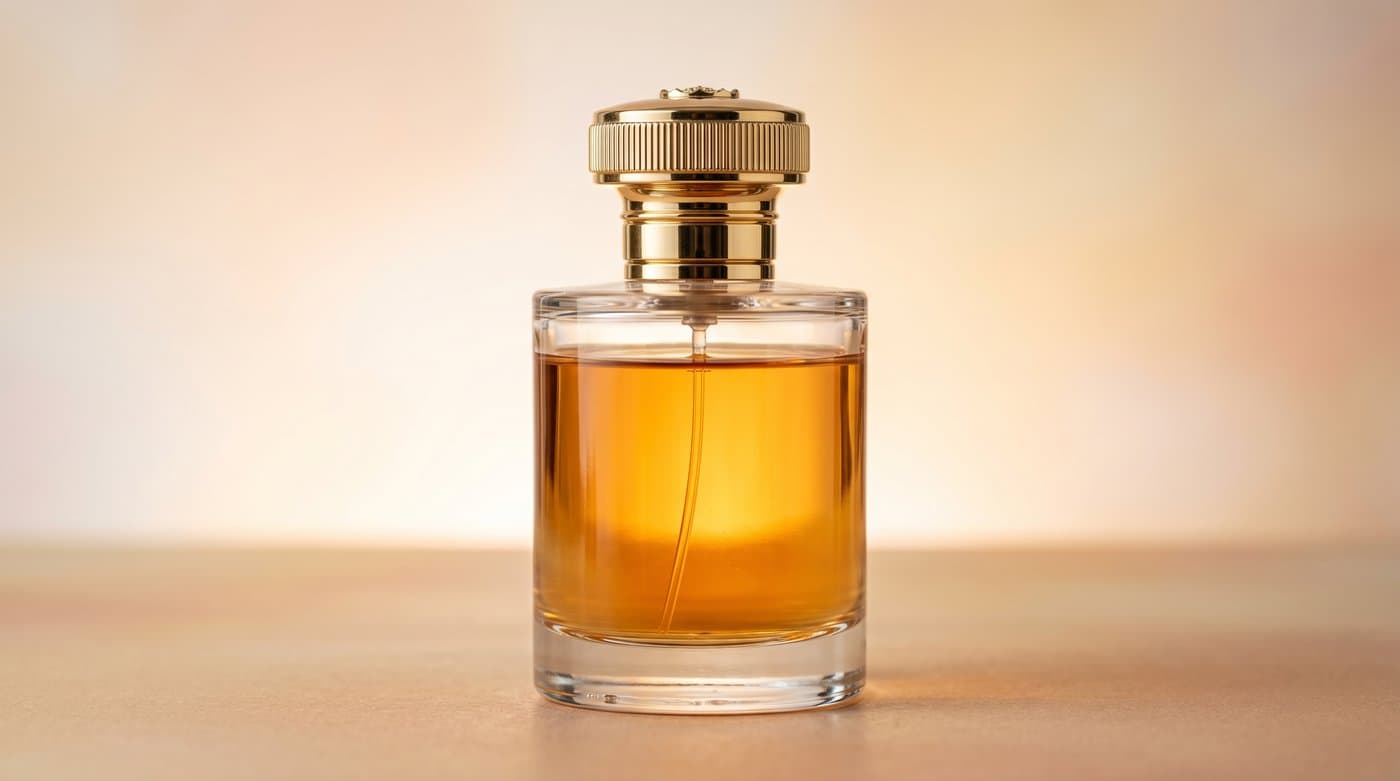
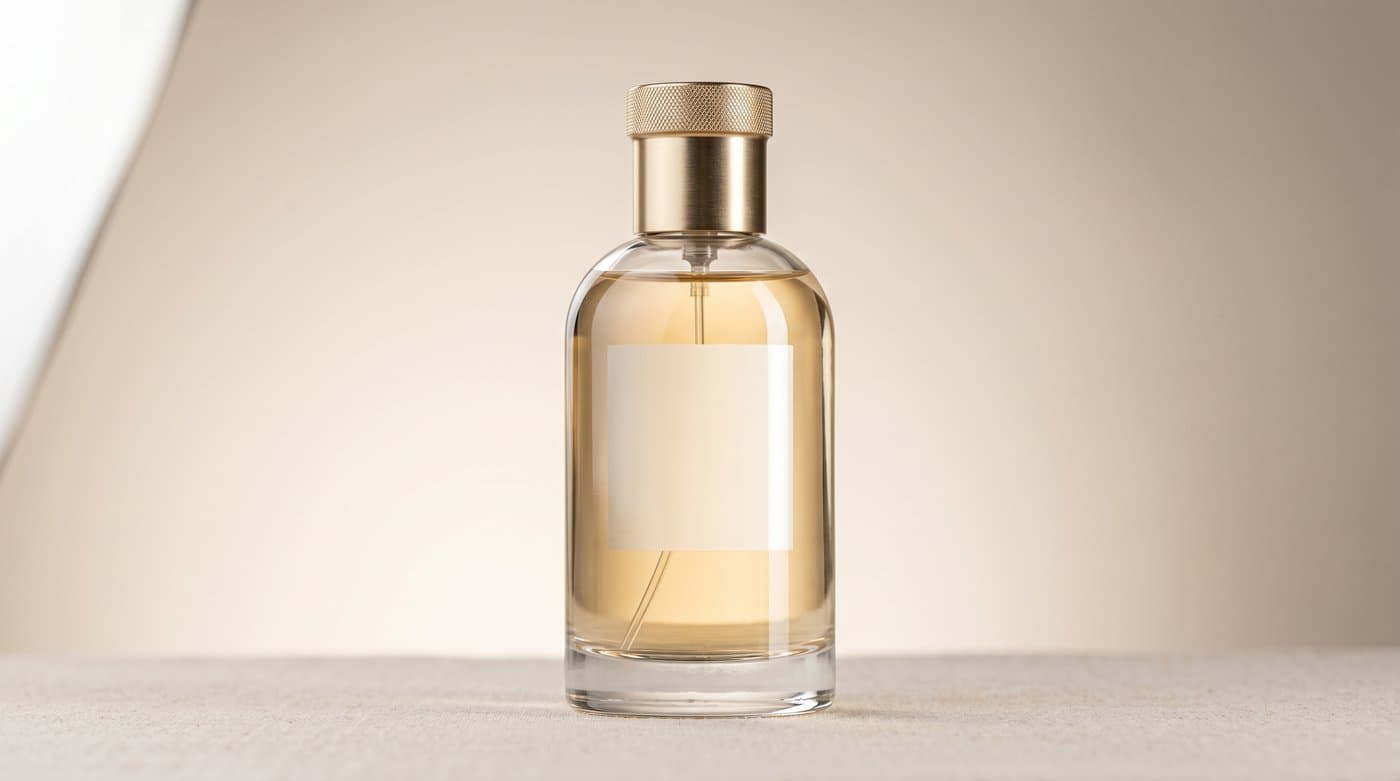
- The clean hero. Bottle and cap, true color, label readable, on a calm background. This is your main image and your marketplace image.
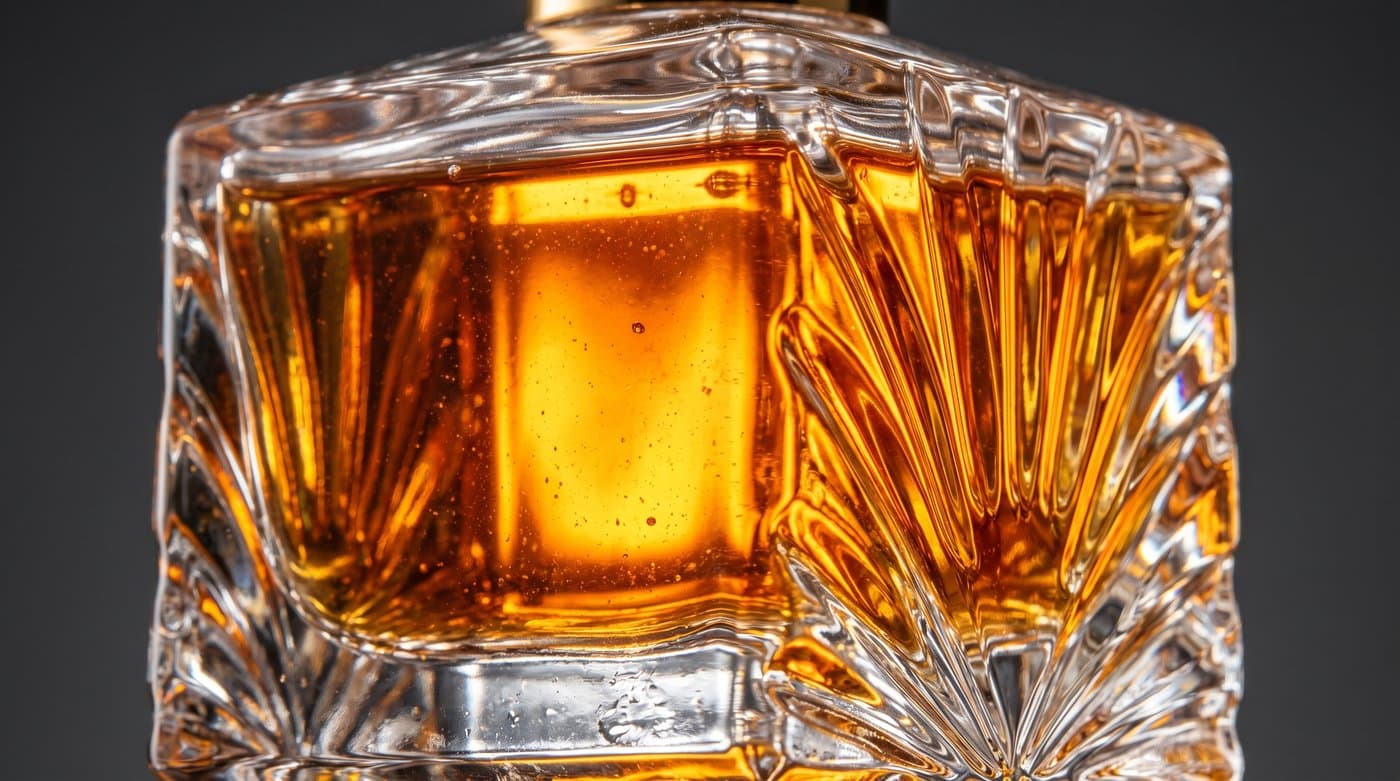
- The detail. A closer frame on the glass, the engraving, the cap, the liquid catching light. This is where craft and price get justified.
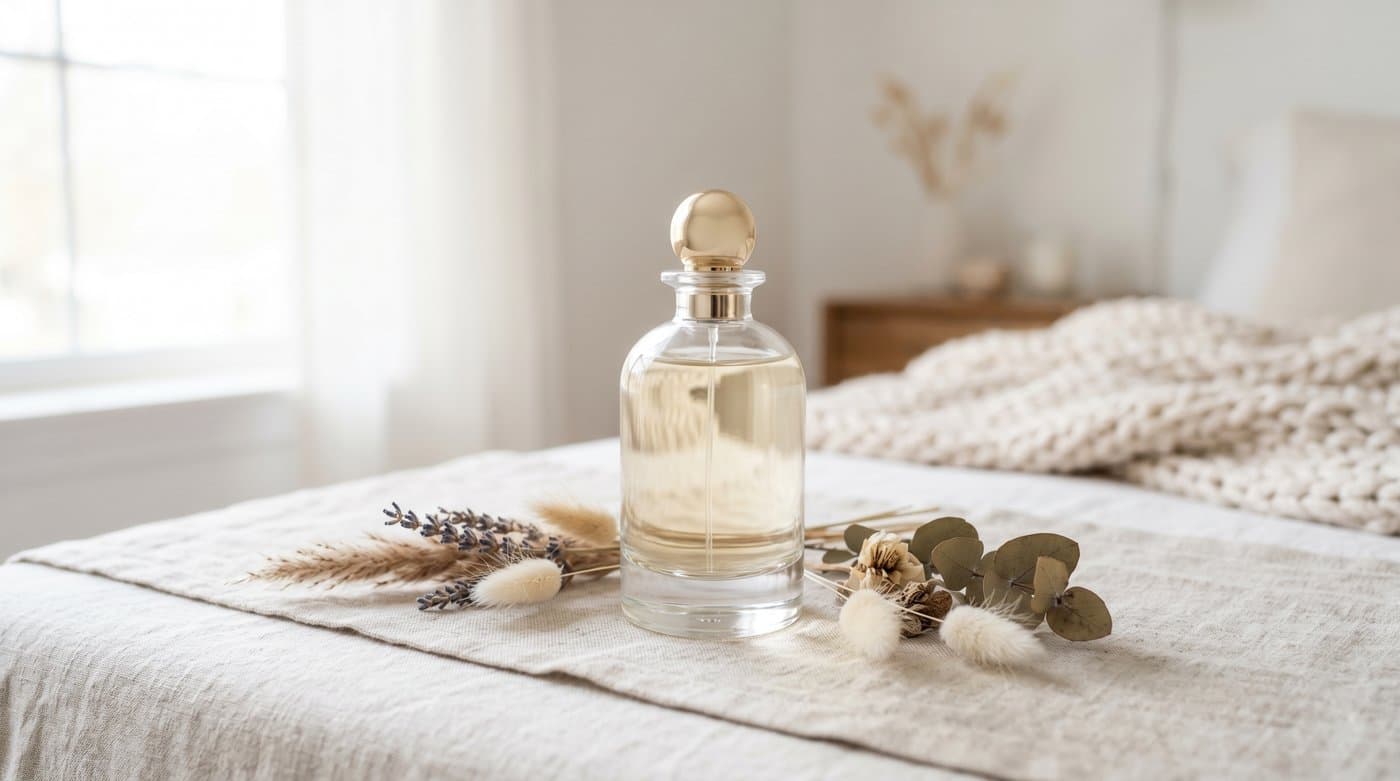
- The mood. The bottle in a styled scene that suggests the scent family, fresh and bright or warm and dark. You cannot show smell, but you can show a feeling that matches it.
Building the mood without a full photoshoot
The mood shot used to mean a stylist, props, a location, and a day of shooting. That is the expensive part of fragrance imagery, and it is exactly the part AI now makes cheap. From one clean photo of the bottle you can place it in a soft morning scene, a dark velvet setting, or a fresh citrus spread, and try ten directions before lunch.
Treat it the way a good stylist would. Keep the bottle accurate, let the scene suggest the scent, and do not bury the product under props. The bottle is still the hero.
Studio, AI, or a photographer: what each really costs
There is no single right answer. It comes down to how many scents you carry, how often the range changes, and what your brand needs to feel like. Here is an honest picture.
| Approach | Rough cost | Time to results | Best for |
|---|---|---|---|
| In-house studio shoot | High setup in lighting, glass control, and learning | Slow per batch | A focused range, full creative control |
| Hiring a photographer | Per-day or per-bottle fees | Days to weeks per round | Launch campaigns and signature hero shots |
| AI product and lifestyle | Low per image, no shoot | Minutes per image | Scaling mood and scene variety from one photo |
Most brands blend them. A photographer for the launch hero that sets the tone, and AI for the mood and scene variety that used to eat a production budget. Photta's perfume photography studio is built for that, turning one bottle photo into clean product shots and styled scenes.
A quick checklist before you publish
- A clean hero, at least one detail shot, and one mood scene per fragrance.
- Reflections shaped on purpose, cap under control, no fingerprints.
- Juice color checked against the real bottle on a calibrated screen.
- Label sharp and legible at thumbnail size.
- Alt text that names the fragrance and the bottle, so the listing is searchable.
You will never let a shopper smell the bottle through their phone. What you can do is make them feel it. Honest glass, true color, and a mood that matches the scent will carry a fragrance further than any block of description.
FAQ
Sources
- Ipsos for the Paper and Packaging Board, packaging and purchase decisions: ipsos.com
- Mordor Intelligence, fragrance and perfume market size: mordorintelligence.com
- Nature, Humanities and Social Sciences Communications, packaging design and purchase intention (2025): nature.com
- Baymard Institute, product page UX research: baymard.com
Tags
Photta
Ready to transform your product photography?
Try Photta free and see the difference AI can make for your e-commerce business. No credit card required.
Start Free Trial