
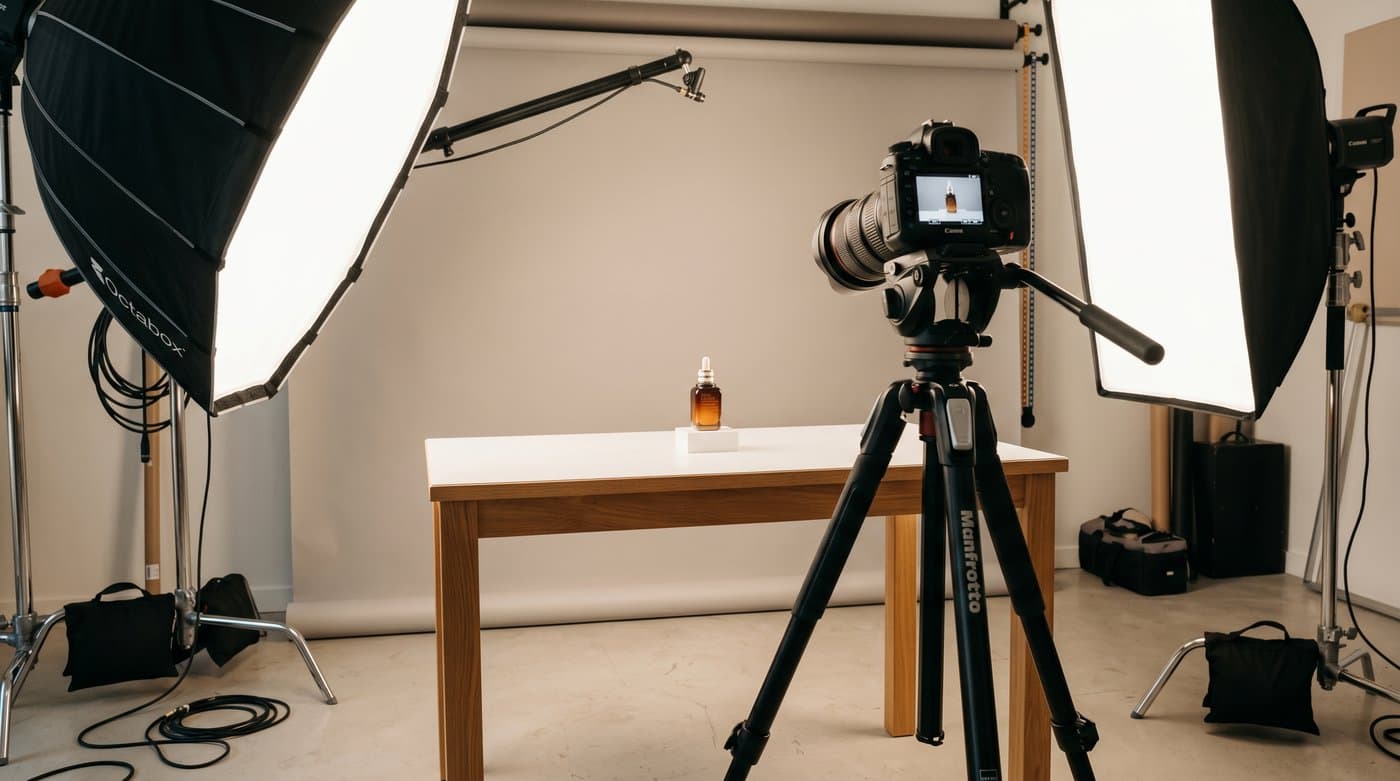
If you are pricing out product photography, the honest answer is that it ranges wildly. In 2026 a single image runs anywhere from about $25 to $500 or more, depending on what you are shooting and how. I spend my days looking at what brands actually pay and what it returns, so here is a clear breakdown of the rates, what drives them, and where AI has genuinely changed the math.
The short version: a plain white-background shot from a freelancer is cheap, a styled lifestyle image with a model is not, and AI now produces catalog-ready images for a few dollars each. Which one is right depends on the job, and most brands end up mixing them.
What product photographers charge in 2026
Rates cluster by how much production a shot needs. A clean packshot is mostly camera time. A lifestyle image is a small production.
| Type of shot | Typical price |
|---|---|
| Simple white-background packshot | $25 to $50 per image |
| Standard catalog image | $35 to $175 per image |
| Amazon-compliant white-background | $30 to $100 per image |
| Styled lifestyle with props or a model | $150 to $500+ per image |
| Half-day shoot (3 to 4 hours) | $500 to $2,500 |
| Full-day shoot (7 to 8 hours) | $1,000 to $5,000 |
These figures line up across industry guides from Lars Miller Media and Shopify. Volume changes the per-image number a lot: shoot 50 or more SKUs in one session and you can negotiate down to roughly $20 to $40 an image, since the setup cost is spread across more shots.
What actually drives the price
The headline rate is only part of it. The real cost stacks up from a few places:
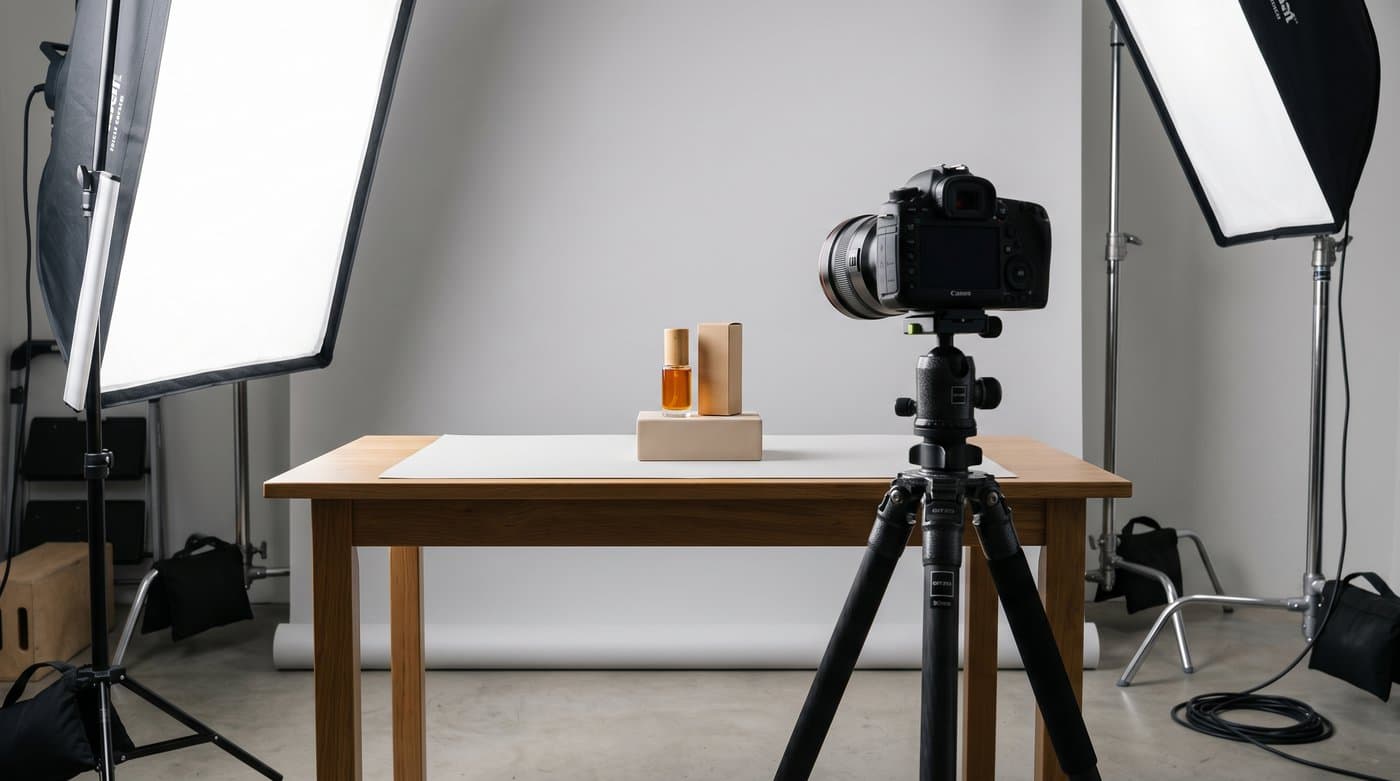
- Studio rental, which adds $500 to $2,000 a day on top of the photographer.
- Models and stylists for lifestyle work, often the single biggest line item.
- Retouching, usually billed per image on top of the shoot.
- Your own time, briefing, shipping product, reviewing, and reshooting.
A useful way to see it: a $2,000 shoot day that produces 30 finished images works out to about $67 an image before retouching even starts, per industry breakdowns. That is the number to compare against, not the headline day rate.
The AI alternative, and what it really costs
This is where the math has shifted. Traditional product photography averages roughly $85 to $250 per SKU once you fold in model fees, studio rental, and post-production. AI tools deliver comparable catalog images at about $3 to $12 each, and brands report cutting their photography costs by 60 to 70 percent, according to 2026 industry data.
The adoption numbers back that up. Around 67 percent of top e-commerce operators now budget specifically for AI imaging tools. For a sense of price, an all-in-one tool like Photta starts free and runs from about $14 a month, generating product shots, on-model images, and lifestyle scenes from a single product photo. At that level, the per-image cost is cents, not dollars.

When a photographer is still worth it
AI has not made photographers obsolete, and anyone telling you that is overselling. A skilled photographer still wins for flagship campaign heroes, complex compositions, and the kind of brand-defining imagery that sets the tone for everything else. The pattern I see working is an 80/20 split: AI for the bulk of the catalog, social content, and seasonal variety, and a photographer for the handful of hero shots that carry the brand.
That split is why the cost question is not really "photographer or AI". It is "which images deserve a photographer, and which should cost you a few dollars". Get that allocation right and you spend far less for far more total imagery.
The true cost of a traditional shoot: what the rate card leaves out
The rate card is the visible part. A shoot's true cost is the rate plus everything the quote assumes you will handle, and the assumptions are where brands are surprised.
- Getting the products there. Shipping samples to the studio and back, insurance on the way, the sample that arrives creased or late and misses its slot.
- Preparation. Steaming, pressing, cleaning, styling; a stylist's day if the garments need one; props bought for one image.
- Models and rights. A model's fee, an agency's cut, and a usage licence with a term, a territory and a channel list that will need renewing.
- Retouching. Often a separate line per image, and always a round of revisions.
- Reshoots. A colour that read wrong under the lights, a product that changed after the shoot, a missing angle nobody noticed until the listing was built.
- Time. The weeks between booking and delivery, during which the product is not on sale, and the second shoot that never quite matches the first.
- Your own hours. Briefing, attending, selecting, approving.
None of these is a reason not to shoot; a lookbook, a campaign or a hero piece is worth every line. They are the lines to write beside the rate before comparing it with anything else, because a per-image rate compared with a per-image credit price is two different products at two different scopes. The comparison that holds is the cost per usable image, at your volume, with every line included on both sides.
How to budget
Start by counting your images, not your shoots. List every product and every shot it needs, then sort them into hero (worth a photographer) and catalog (worth AI). Price the hero shots at real photographer rates, price the rest at AI rates, and you will usually find the total lands well under a traditional all-photographer budget while producing more images. Whatever you spend, lead each listing with its strongest image, since shoppers explore the pictures before any text.
FAQ
Sources
- Lars Miller Media, product photography pricing: larsmillermedia.com
- Shopify, product photography pricing factors: shopify.com
- Nightjar, the real cost of product photography: nightjar.so
- Photoroom, AI product photography statistics: photoroom.com
- Baymard Institute, product page UX research: baymard.com