
Photta
Transform Your Product Photography with AI
Join thousands of brands creating professional product photos instantly. Start free, no credit card required.
Get Started Free
Selin Aydın
Visual Commerce Lead at Photta
A handbag is one of the easier fashion items to sell online, and most sellers still get the photos wrong. The bag sags into a shapeless lump, or it floats on white at a size the shopper cannot read. Both problems cost you sales, and both are fixable in the way you shoot.
The single most important thing a bag photo has to communicate is scale. Is this a tote you can live out of, or a little evening pouch? Get that wrong and you either lose the sale or earn a return. Baymard Institute found that 42 percent of shoppers try to judge a product's size straight from the images, yet 28 percent of major retailers do not give them a single in-scale shot to work with.
Why your bags look flat online
An empty bag collapses. Soft leather folds, the base caves, and a piece that looks structured in person reads as a deflated sack on screen. Add a plain white background with nothing for size reference, and the shopper has no way to picture the bag in their hand.
There are really three things a bag photo has to fight: shape, scale, and surface. Shape, because the bag has to stand up and look like itself. Scale, because a bag is meaningless without a sense of size. Surface, because leather grain, hardware, and stitching are most of what a buyer is paying for, and a flat photo flattens all of it.
The shots a bag listing needs
Shoppers look at pictures before anything else. Baymard found that 56 percent explore the images first, before the title or the price. A bag deserves a full set, not one hero and done.
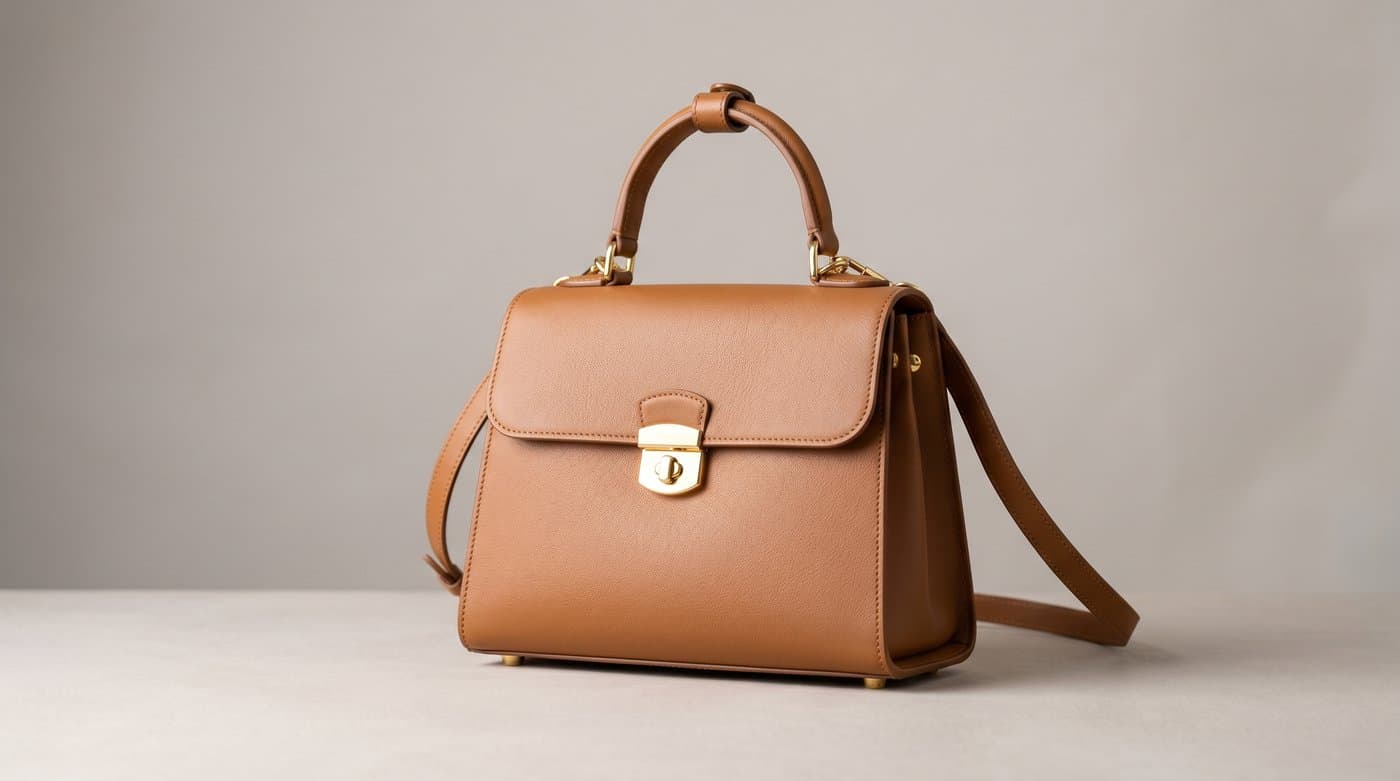
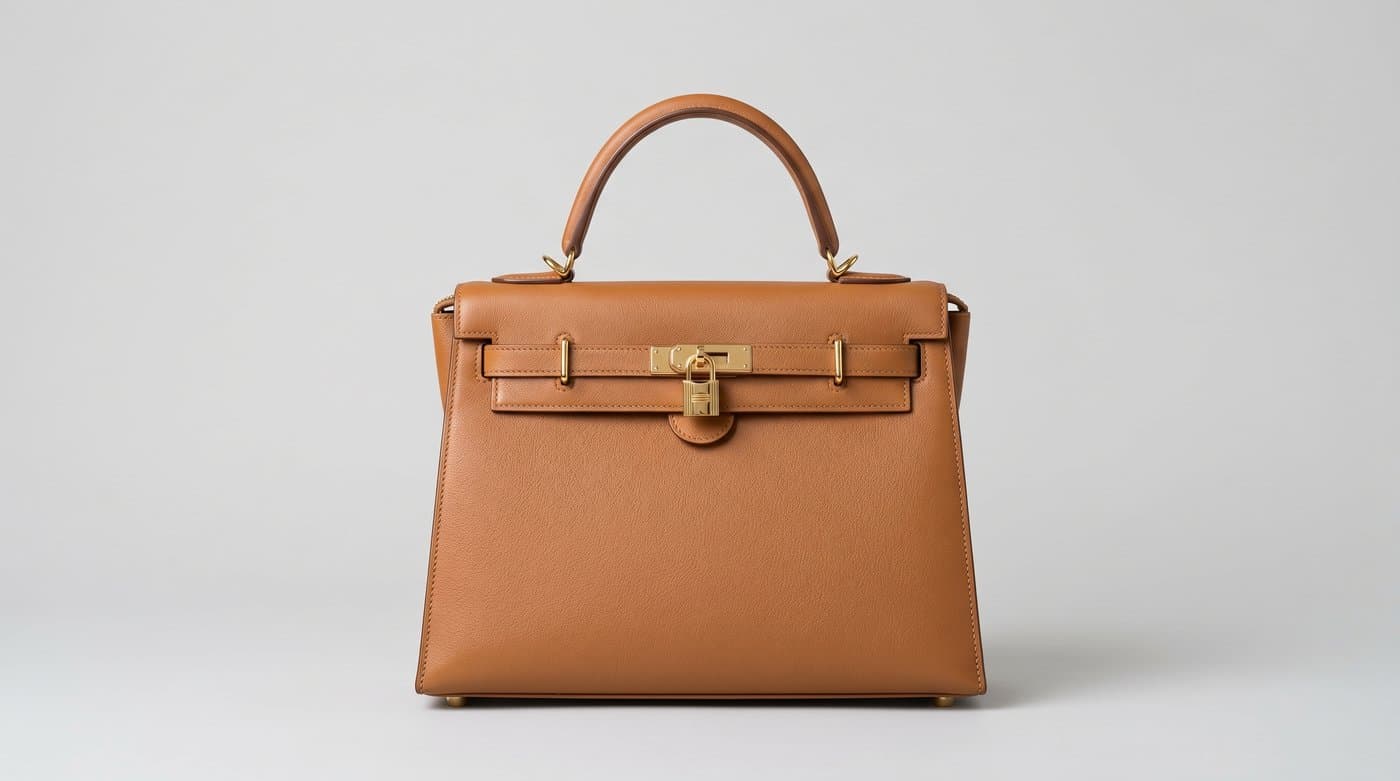
- The hero. The bag standing on its own, filled out so it holds its shape, hardware catching a little light.
- The back. People pick a bag up and turn it over in a store, so show them the back online.
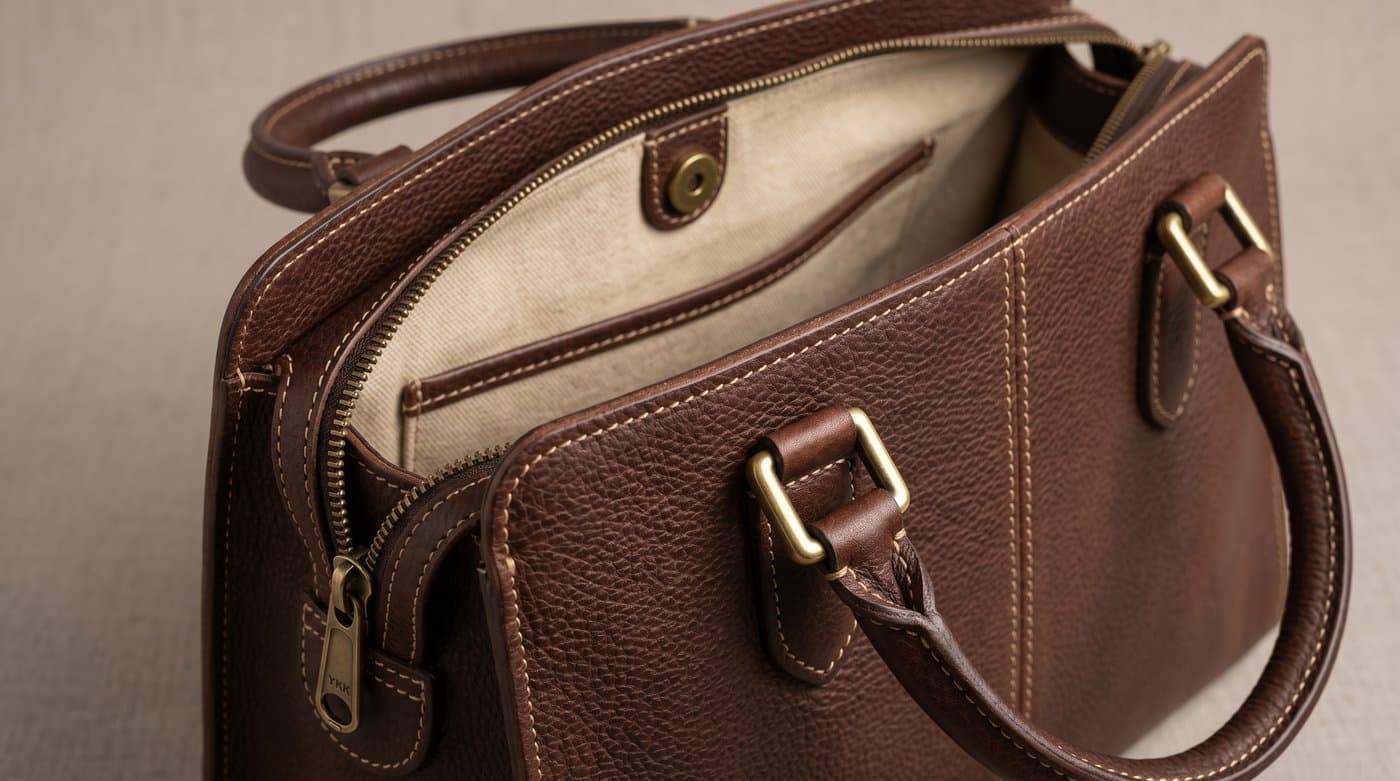
- The interior. Open it. Show the lining, the pockets, and how much actually fits.
- The detail. A close frame on the grain, the zipper pulls, the feet, the stitching. This is where the price gets justified.
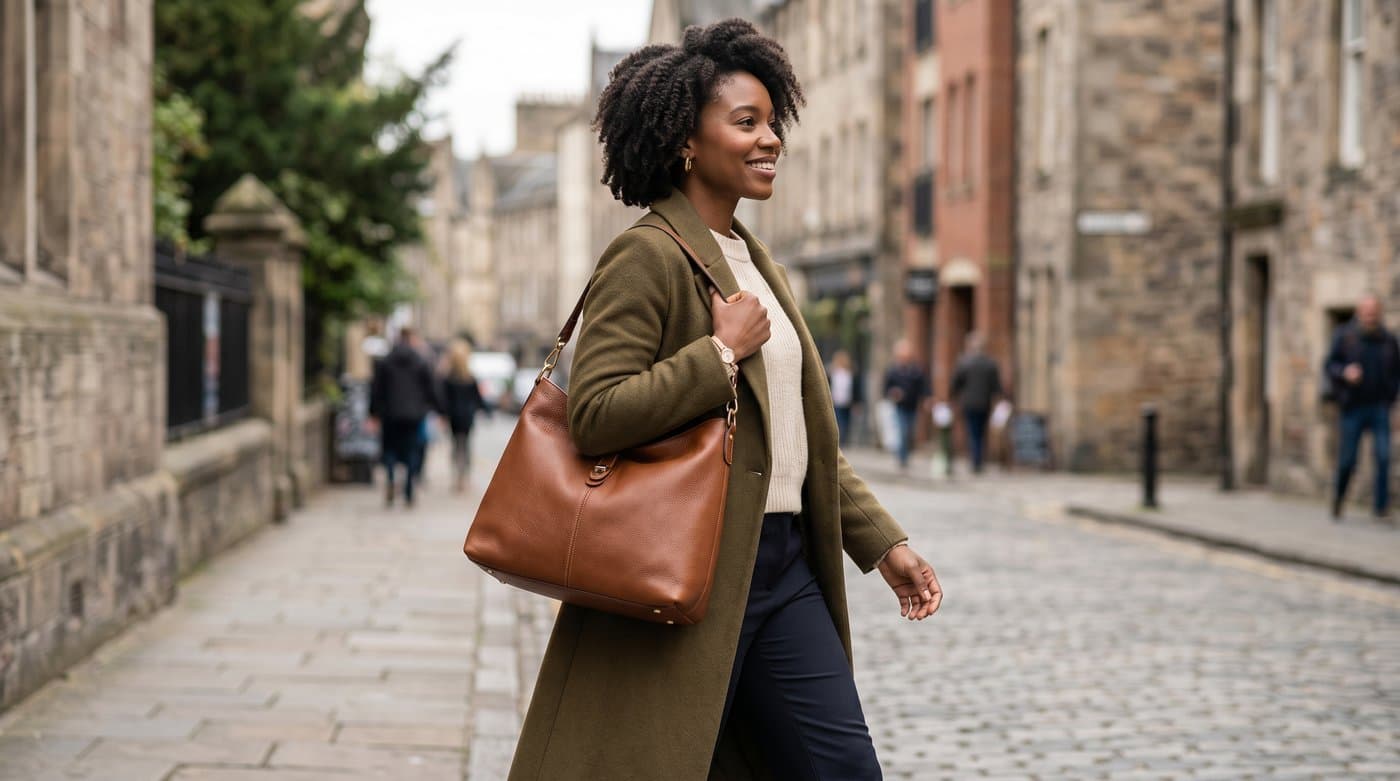
- The worn shot. The bag on a shoulder, in a hand, or in the crook of an arm, so the size finally makes sense.
Showing scale is the whole game
If you only fix one thing, fix this. Baymard's testers kept discarding products they would have liked simply because they misread the size. For a bag, the cure is direct: put it on a body, or beside something everyone knows.
A worn shot does double duty. It pins down the size, and it sells the feeling of carrying the thing. A clutch tucked under an arm, a tote on a shoulder heading out the door, a crossbody sitting where it would actually sit. That is the image that turns a maybe into a checkout.
To fill the shape for the studio shots, stuff the bag with tissue or a filler so it stands tall and square. Light it to bring out the grain, and keep the hardware reflections clean rather than blown out. For patent leather and metal clasps, the same rules as glass apply: shape the reflection with cards instead of fighting it.
White background or lifestyle?
Both, in the right slots. The clean hero on a calm background is your main image and your marketplace image, since it reads instantly and meets platform rules. The worn and lifestyle shots come right after, doing the work of scale, styling, and desire. One answers what is it, the other answers what is it like to carry.
Accessories are a kinder category than apparel for returns, since there is no size chart to get wrong. Industry return benchmarks put bags below clothing. But the returns that do happen are almost always a scale or material surprise, which is exactly what a worn shot and a close texture shot prevent.
Studio, AI, or a photographer: what each really costs
Handbags are a large and growing category, big enough that the market supports plenty of players, and small brands need to look as polished as the established ones. Here is an honest look at how to get there.
| Approach | Rough cost | Time to results | Best for |
|---|---|---|---|
| In-house studio shoot | High setup in lighting, space, and styling | Slow per batch | A tight range, full control of look |
| Hiring a photographer plus model | Day rates plus model fees | Days to weeks per round | Campaign and signature worn imagery |
| AI product and on-model | Low per image, no shoot | Minutes per image | Clean product shots and worn shots without a model day |
The worn shot is the expensive one, since it has traditionally meant a model, a stylist, and a location. That is the part AI changes. From one product photo you can place the bag on a range of people and settings, which is how a small label gets the on-arm variety that used to need a casting budget. Photta's bag photography studio is built for exactly that.
A quick checklist before you publish
- Hero, back, interior, detail, and at least one worn or in-scale shot per bag.
- Bag filled out so it holds its shape, hardware reflections under control.
- One image that pins down the real size, ideally worn on a body.
- Consistent background and framing across the range.
- Alt text that names the bag style, color, and material.
A bag is a shape, a size, and a feel. Show all three honestly and you remove the two reasons people hesitate, and the two reasons they send it back.
FAQ
Sources
- Baymard Institute, in-scale product images: baymard.com
- Baymard Institute, product page UX research: baymard.com
- Corso, ecommerce return rate benchmarks by industry: corso.com
- Mordor Intelligence, handbags market: mordorintelligence.com
Tags
Photta
Ready to transform your product photography?
Try Photta free and see the difference AI can make for your e-commerce business. No credit card required.
Start Free Trial