
Photta
Transform Your Product Photography with AI
Join thousands of brands creating professional product photos instantly. Start free, no credit card required.
Get Started Free
Selin Aydın
Visual Commerce Lead at Photta
Glasses might be the hardest thing in fashion to sell online. In the third quarter of 2024, 86 percent of people who bought eyewear did it in a store, and only 14 percent bought online, according to The Vision Council. People want to put frames on their face before they pay. If your product page cannot stand in for that mirror, the sale walks.
The fix is not complicated, but it is specific. A glasses listing has two jobs: show the frame honestly with good product photography, and let the shopper see the shape on a real face with virtual try-on. This guide covers both, plus an honest look at what a studio shoot, AI, and hiring a photographer each cost you.
Eyewear is a try-it-on category, and the numbers show it
The global eyewear market is large and still growing. Statista projects revenue of US$35.17 billion in 2026, rising about 4.69 percent a year through 2030. Plenty of that demand is online, yet most glasses are still bought in person. The Vision Council found online new-glasses purchases dropped to their lowest level in roughly two years during 2024, with that 86 to 14 split favoring stores, a pattern trade press tracked all year.
Why the gap? Frames sit on your face for most of your waking life. Buyers worry about fit, about whether a shape suits them, about color looking different in person. Those worries turn into returns. When you cannot try something on, the product photo and the try-on tool are the only things standing between a shopper and a refund request.
What a glasses listing actually has to show
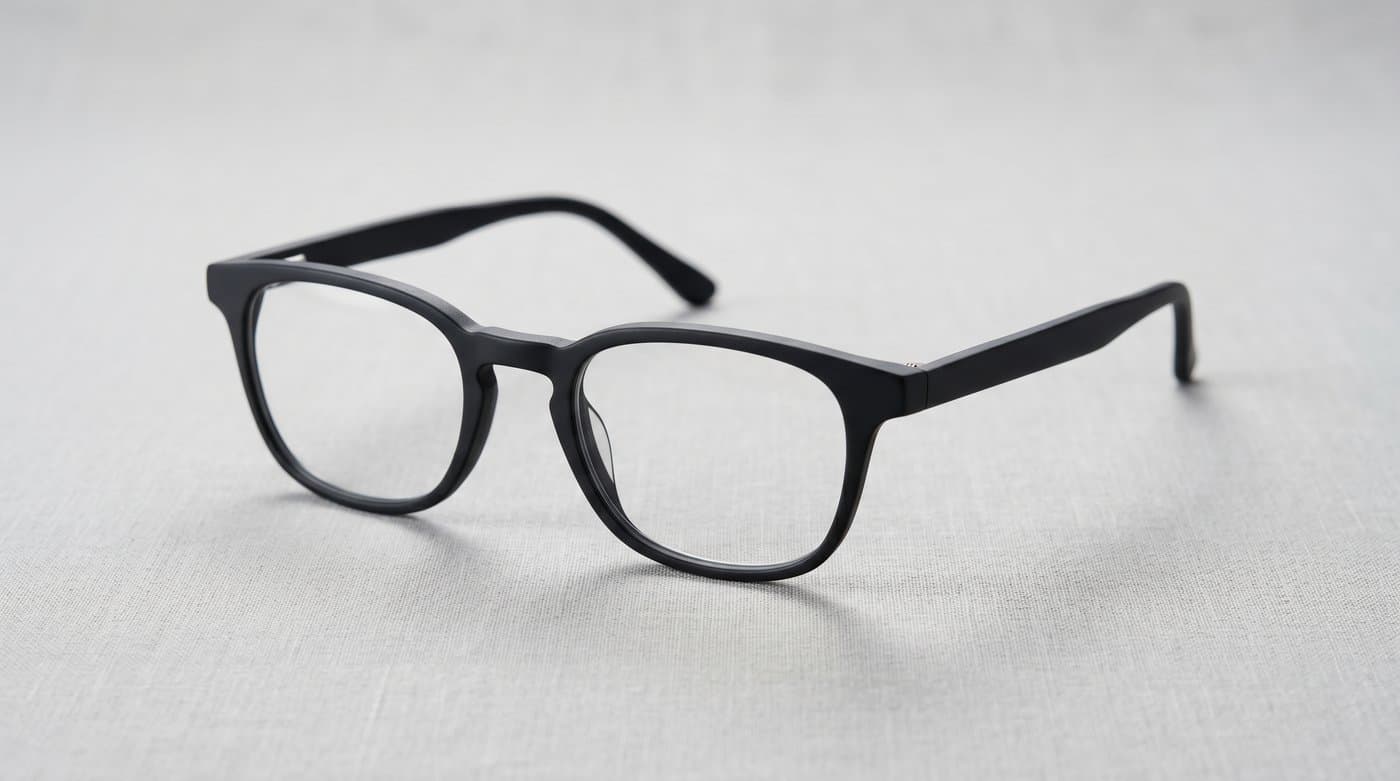
Shoppers lead with their eyes. Baymard Institute found that 56 percent of shoppers explore the images first, before the title or the description. For eyewear that means your photo set is the pitch, not the supporting act.
A complete frame listing usually needs:
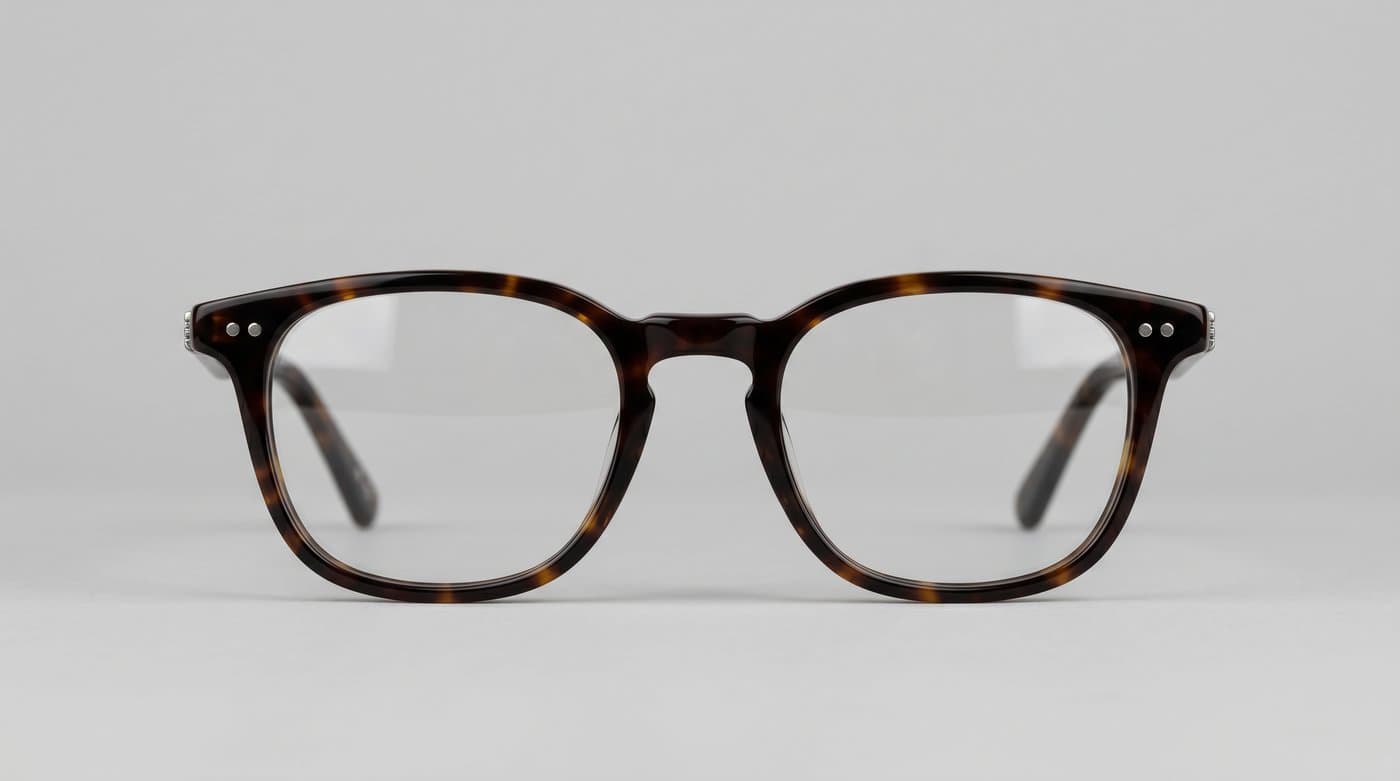
- A clean front shot on a plain background, so the shape reads instantly.
- A three-quarter angle that shows depth and how the temples flare.
- A side profile, which is where temple art, hinges, and thickness live.
- A close detail of the materials, the hinge, and any logo or pattern.
- At least one shot on a face, so people can judge scale and proportion.
That last one matters more than most sellers expect. Baymard also found that 42 percent of shoppers use images to gauge size. A frame floating on white tells you nothing about how wide it sits or how it frames the eyes. A frame on a face does.
Photographing glasses without the glare
Lenses are mirrors. They reflect your light, your camera, your ceiling, and the photographer in a hoodie. Taming that is most of the work.
A few things that genuinely help:
- Light through diffusion. A softbox or a white scrim turns a hard hotspot into a soft, even sheen you can place where you want it.
- Tilt the frame a touch. A dead-straight lens throws reflections back at the camera, while a small angle sends them off to the side.
- Flag the lenses with black cards. Black foam board on either side gives you clean, dark reflections instead of a cluttered room.
- Protect the real color. Frame color is a top reason for returns, so check it against the physical product on a calibrated screen before you publish. Tortoise and translucent acetates shift fast under the wrong white balance.
- Shoot a macro of the hinge and temple. It signals quality and answers the questions a curious buyer would ask in a shop.
None of this needs a huge studio. It needs control of your light and a little patience.
Virtual try-on: what it solves, and what it does not
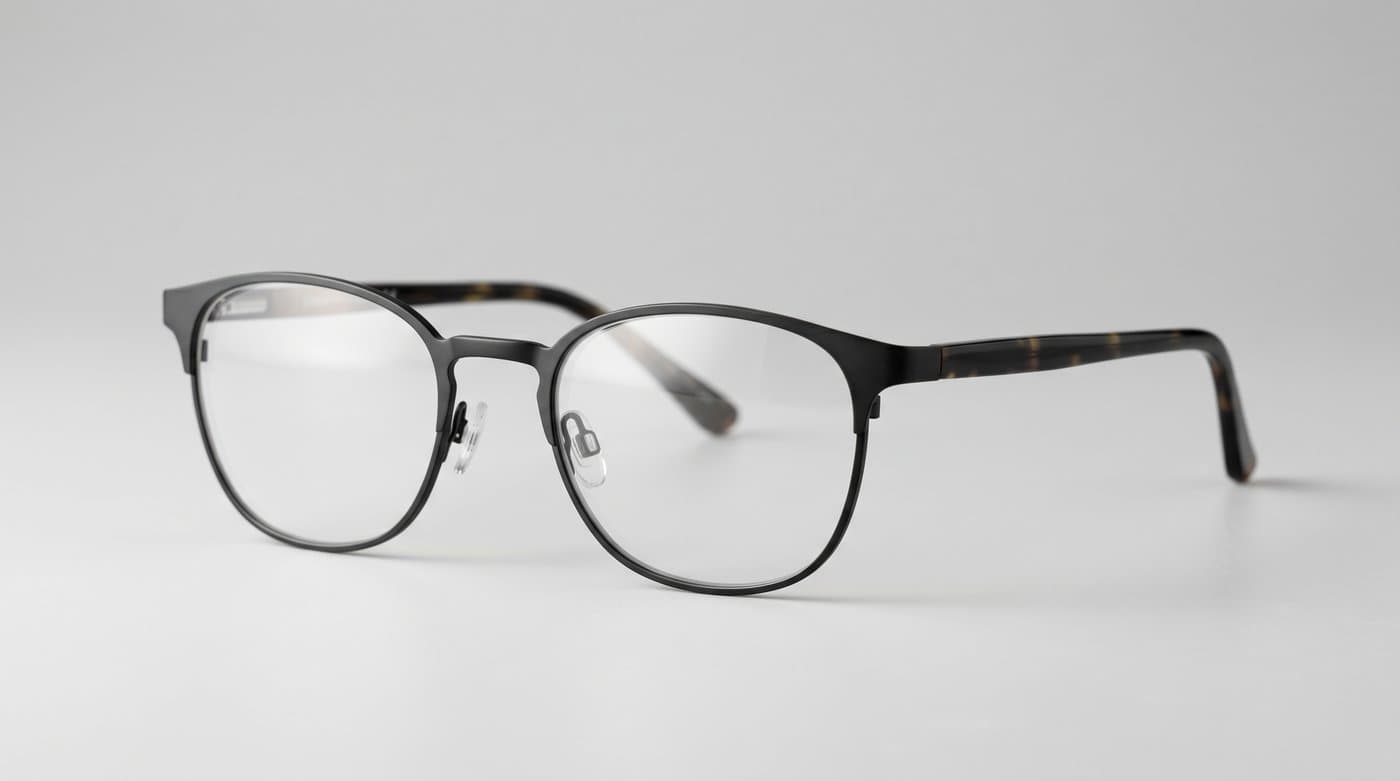
Virtual try-on exists to bring back the mirror. The shopper points a camera at their face, or picks a model face, and sees the frame in place. Since eyewear is the category people most want to try on, it speaks to the exact reason they hesitate.
It is not a fitting. Try-on shows shape, proportion, and color well. It is weaker on the feel of weight, the precise sit on one person's nose bridge, and how progressive lenses will behave. Treat it as a strong preview and pair it with generous returns and clear sizing, so the shopper feels safe.
There is a production angle here too. To show a frame on a range of faces the old way, you book models, a studio, and a shoot day. AI on-model tools now generate those try-on style images from a single product photo, which is what makes a diverse, every-frame catalog realistic for a small brand.

Studio, AI, or a photographer: what each really costs
There is no single right answer. It depends on volume, budget, and how often your range changes. Here is an honest picture.
| Approach | Rough cost | Time to results | Best for |
|---|---|---|---|
| In-house studio shoot | High setup in lighting, space, and learning | Slow per batch | Big catalogs shot often, full control |
| Hiring a photographer | Per-day or per-frame fees | Days to weeks per round | Hero and campaign imagery, brand launches |
| AI product and on-model | Low per image, no shoot | Minutes per image | Scaling a catalog, on-model shots without models |
Most growing eyewear sellers end up blending them. A photographer for a few hero shots that set the brand tone, and AI for the long tail of frames and the on-model variety that used to need a casting budget. Photta's eyewear studio is built for that second job, turning one frame photo into clean product shots and on-model try-on style images.
A quick checklist before you publish
- Front, three-quarter, side, detail, and at least one on-face shot per frame.
- Reflections controlled and color checked against the real product.
- Consistent background and framing across the range, so the catalog looks like one brand.
- A try-on option, paired with clear sizing and an easy return path.
- Alt text on every image that names the frame style and color.
Glasses will always be a try-it-on product. You cannot change that, but you can answer it. Honest photos, a shot on a face, and a try-on tool together rebuild the mirror that an online store is missing.
FAQ
Sources
- The Vision Council, Q3 2024 consumer research: thevisioncouncil.org
- Optometry Times coverage of the Vision Council Q3 data: optometrytimes.com
- Statista, Eyewear Worldwide market outlook: statista.com
- Baymard Institute, product page UX research: baymard.com
Tags
Photta
Ready to transform your product photography?
Try Photta free and see the difference AI can make for your e-commerce business. No credit card required.
Start Free Trial